


-
Fields of Study
- K-12 Education
- Advanced Anatomy
- Forensics
- Physical Therapy
- Primate Locomotion
- Non-primate Locomotion
- Biological Anthropology
- Paleontology
- Bioarchaeology
- Marine-Aquarium
- Veterinary
-
Zoology
- All Zoological Items
- Endangered Species
- Skulls
- Skeletons
- Cranial Elements
- Postcranial Elements
- Eggs
- Limbs
- Teeth & Fangs
- Claws & Talons
- Brains & Endocasts
- Life Casts
- Pathology & Trauma
- Wildlife Forensics
- Sets
- Bird Sets
- Accessories
- Birds
- Mammals
- Reptiles & Amphibians
- Fish
- Sharks & Rays
- Turtles & Tortoises
- Anatomy for the Artist
- Decor
- Veterinary
- Elements
- Pathology & Trauma
-
Sets & Series
- Natural History Gift Ideas
- Decor
- Scale & Sculpture
- 3D Scanned & Printed
- Bone Boxes
- Locomotion Sets
- Forensic Sets
- Advanced Anatomy Sets
- Physical Therapy Series
- Fetal Sets
- Economy Series
- Zoology Sets
- Bird Sets
- Claw & Talon Sets
- Tooth & Fang Sets
- Primate Skull Sets
- Fossil Hominid Sets
- B.I.O.P.S.I. - Babiarz Institute
- Maxwell Collection
- Bergdorf Goodman Windows
- Accessories
- New Products
-
Our Company
- News & Specials
- Printable Handouts
- About Us
- Why Choose Bone Clones
- Bone Clones in the News
- Mission
- Contact Us
- Privacy and Security
- Frequently Asked Questions
- Testimonials
- Community Outreach
- Legal/Copyright
- Flyers
- Choosing Original Specimens
- Museum Exhibitions
- Natural History Gift Ideas
- About the Economy Series
- Acknowledgements
- Ordering & Delivery
- Warranty
- Refund/Return Policy
- Price List at a Glance
- Our Catalog
- Osteological Evaluation Reports
- About 3D Printing
- Sawyer & Maley Neanderthal Reconstruction
- Site Introduction
- Newsletter Archive
-
Human Anatomy
- All Human Anatomy
- Human Skulls
- Human Skeletons
- Head & Neck
- Postcranial Elements
- Advanced Anatomy
- Physical Therapy / Joints
- Human Brains & Endocast
- Human Life Casts
- Maxwell Museum
- Sets & Series
- Accessories
- Osteological Evaluation Reports
- Featured
- Adult Human Anatomy
- Adolescent Human Anatomy
- Child Human Anatomy
- Fetal Human Anatomy
-
Zoology
- All Zoological Items
- Endangered Species
- Skulls
- Skeletons
- Cranial Elements
- Postcranial Elements
- Eggs
- Limbs
- Teeth & Fangs
- Claws & Talons
- Brains & Endocasts
- Life Casts
- Pathology & Trauma
- Wildlife Forensics
- Sets
- Bird Sets
- Accessories
- Birds
- Mammals
- Reptiles & Amphibians
- Fish
- Sharks & Rays
- Turtles & Tortoises
- Fossil Hominids
- Non-human Primates
- Paleontology
- Forensics
All items sold on this website are replicas and are 1:1 scale unless stated otherwise. All Bone Clones® products are made in the USA. No real/natural bone is available on this site.
 ALSO SEE:
 button in the upper-right to email it.
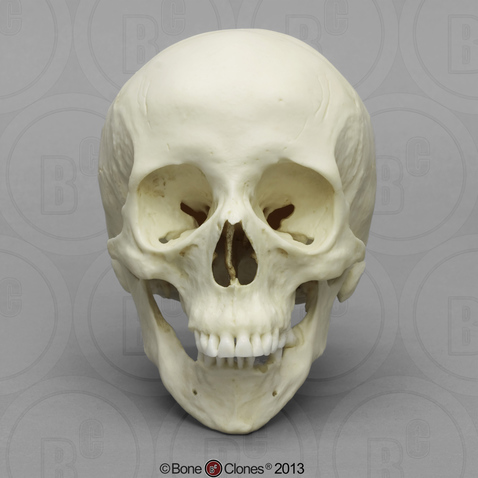
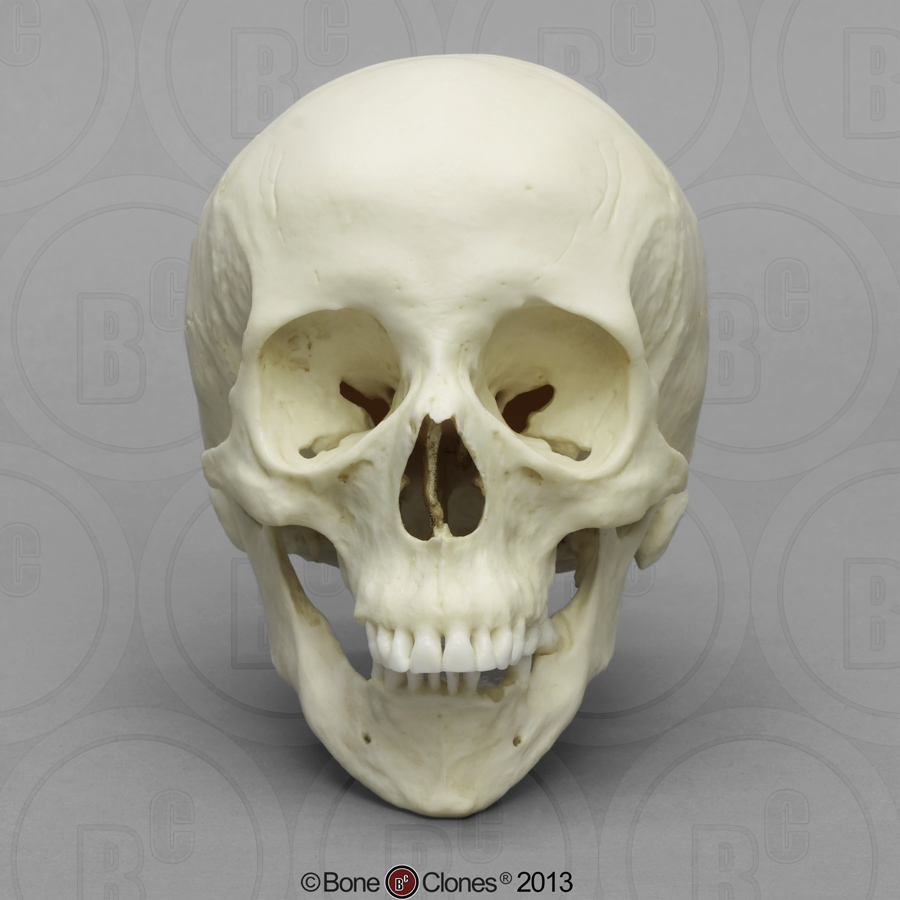
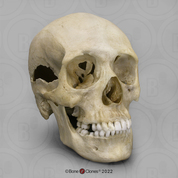
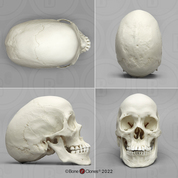
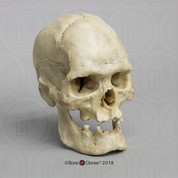
Human Female Skull with Down Syndrome
BCM-801 $357.00
This human skull is from a documented 66-year-old female who had Trisomy 21 (Down syndrome). Some of the features associated with this condition and evident in this skull are a flat occiput, brachycephaly, and a markedly deep palate. The skull also has a preponderance of non-metric traits within the European spectrum. An osteological evaluation report is available for print and download here: BCM-801-Report. 2-part skull (separate cranium & jaw).
Please note that specimens from the Maxwell Collection can only be sold to recognized educational institutions and professionals associated with educational institutions.
More About The Bone Clones® Maxwell Collection Series
| Scientific Name | Catalogue # | Size | Price |
| Homo sapiens | BCM-801 | 7" L x 5" W x 7" H 17.5L x 13W x 18H (cm) | $357.00 |
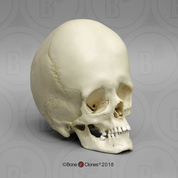
Related Products:
Newsletter Signup


9200 Eton Ave.
Chatsworth, CA 91311 USA
© 1992-2024 Bone Clones, Inc. All Rights Reserved.


Customer Service




© 2024 BONE CLONES, INC. / Made by MEV