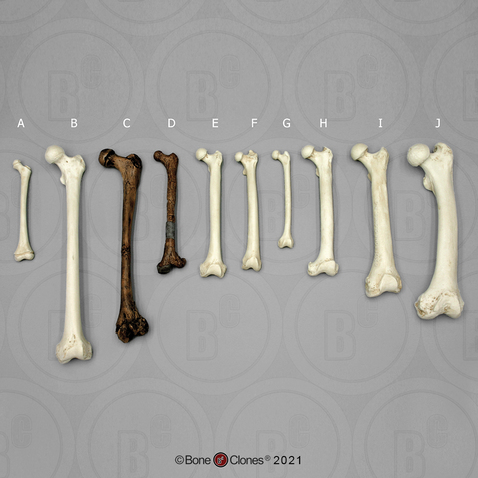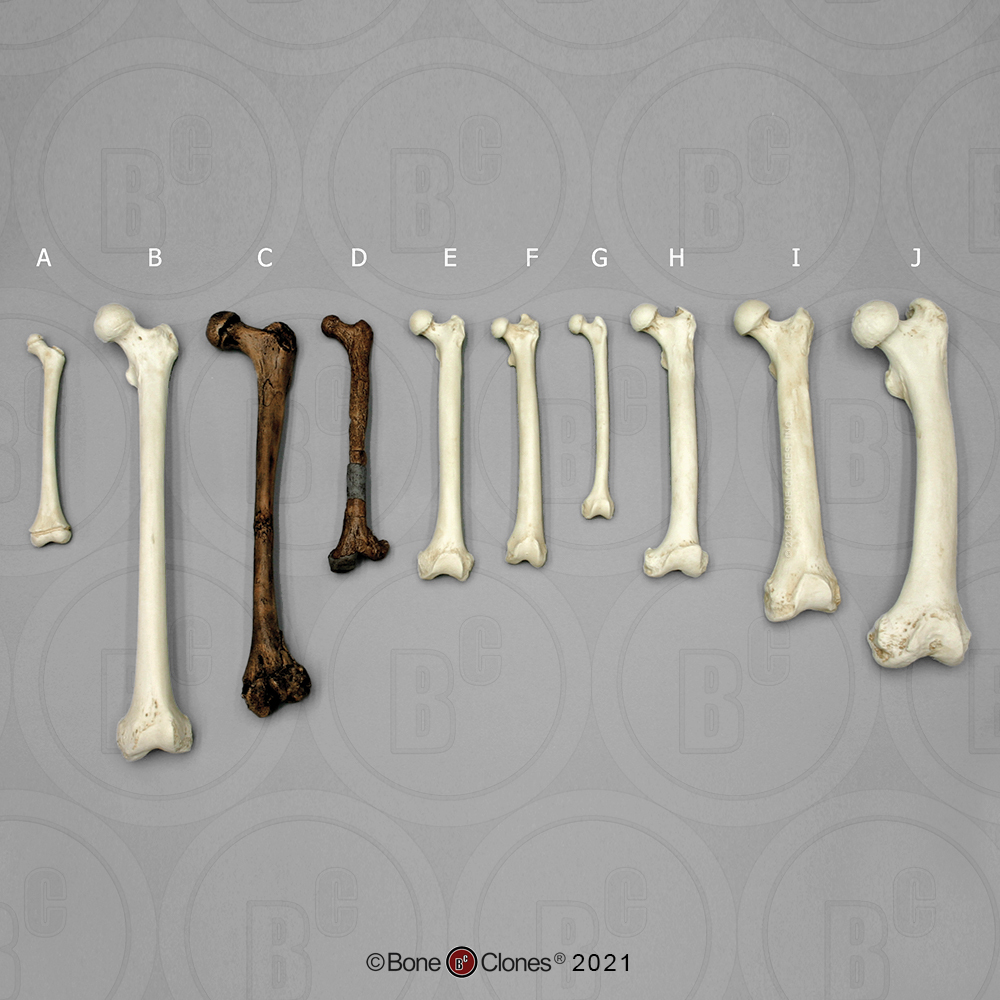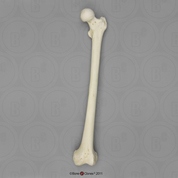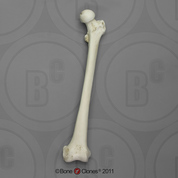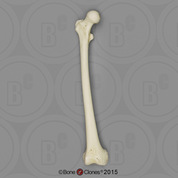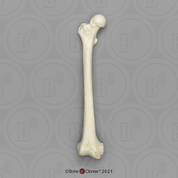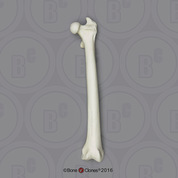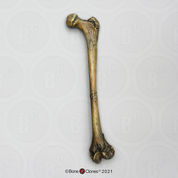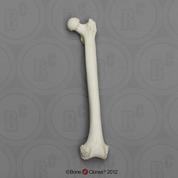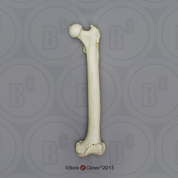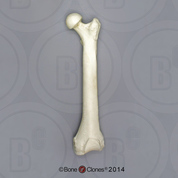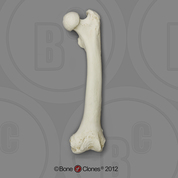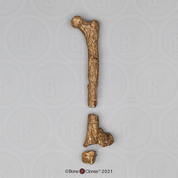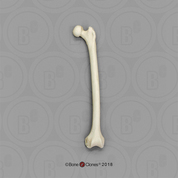


| Primate Postcranial (nonhuman) - Bone Clones offers postcranial parts from all of the skeletons we produce. With such a large selection of complete skeletons, we have available an enormous selection of postcranial skeleton parts. Perfect for comparative anatomy, we produce Bone Clones® pelvis assemblies, femurs, hands and feet, half skeletons, vertebral columns…and can offer virtually any portion of any skeleton we produce. Items are available individually or as sets, and can be purchased either articulated or disarticulated. We've assembled some comparative sets: 10 Primate Femurs (KF-001) or 11 Primate Hyoids (KO-110-SET). In addition, we offer Life Casts of Great Ape hands and feet. Please see our collections of Femurs, Pelvis and Femur Sets, Innominate and Femur Sets, Humerus, Scapula, and Clavicle Sets and Intermembral Sets. Please contact us with your specific needs. |
Product # | Product Name | Description |
|---|---|---|
KF-001 | Set of 10 Primate Femurs | This set of primate femurs is excellent for comparative study. It includes femurs from a 5-year-old human child, an adult human male, Homo ergaster, the Lucy Australopithecus afarensis, a male gorilla, a chimpanzee, a bonobo, siamang, orangutan and baboon... |
![]() KO-028-P | Gorilla pelvis assembly | Pelvis from our Gorilla skeleton, SC-028, cast from a very large, male Silverback Lowland Gorilla. The largest primate, Gorillas spend most of their day eating to support their large mass... |
KO-036-C | Australopithecus afarensis, "Lucy", cranium fragments | Australopithecus afarensis, "Lucy", cranium fragments KO-036-C .Discovered by Donald Johanson in 1974 in Ethiopia, "Lucy", at 3.2 million years, has ... |
KO-036-F | Australopithecus afarensis, "Lucy", femur | Australopithecus afarensis, "Lucy", femur KO-036-F Discovered by Donald Johanson in 1974 in Ethiopia, "Lucy", at 3.2 million yea ... |
KO-036-J | Australopithecus afarensis, "Lucy", jaw | Australopithecus afarensis, "Lucy" A.L. 288-1, jaw KO-036-J. Discovered by Donald Johanson in 1974 in Ethiopia, "Lucy", at 3.2 mil ... |
KO-036-P | Australopithecus afarensis, "Lucy", Innominate | A.afarensis "Lucy" A.L. 288-1 -KO-036-P. 1/2 innominate. Discovered by Donald Johanson in 1974 in Ethiopia, "Lucy", at 3.2 mill ... |
KO-036-PA | Australopithecus afarensis "Lucy" Pelvis, Articulated | We constructed the "Lucy" pelvis by using casts of the left innominate and sacrum, which were part of the discovery. The right innominate (colored gray) is a reconstruction... |
KO-036-PD | Australopithecus afarensis "Lucy" Pelvis, Disarticulated | We constructed the "Lucy" pelvis by using casts of the left innominate and sacrum, which were part of the discovery. The right innominate (colored gray) is a reconstruction... |
KO-36-PF | Australopithecus afarensis, "Lucy", bones, set of 5 | 1/2 Pelvis, Sacrum and Femur in 3 parts - set has 5 pieces total. Set from the Australopithecus afarensis A.L. 288-1 skeleton known as Lucy. Discovered by Donald Johanson in 1974 in Ethiopia Lucy, at 3.2 million years, has been considered the first human... |
KO-036-PS | Australopithecus afarensis, "Lucy" - Innominate & sacrum | Australopithecus afarensis, "Lucy" Innominate & Sacrum KO-036-PS. Discovered by Donald Johanson in 1974 in Ethiopia, "Luc ... |
KO-036-S | Australopithecus afarensis, "Lucy", sacrum | Australopithecus afarensis, "Lucy" A.L. 288-1, sacrum KO-036-S. Discovered by Donald Johanson in 1974 in Ethiopia, "Lucy", at 3.2 ... |
KO-102 | Male Chimp Hyoid | The hyoid, a horseshoe-shaped bone, is unique in that it is the only bone not articulated to any other bone of the skeleton, instead being connected to the skull by ligaments and muscles. The hyoid is implicated in the evolution of speech development... |
ko-110-set | Set of 11 Primate Hyoids | Our set of 11 primate Hyoids, including samples of the great and lesser apes, modern human and Neanderthal. This comparative set is an excellent teaching tool for comparative anatomy... |
![]() KO-123-P | Bonobo pelvis assembly | Pelvis cast from a female, 9-year-old Bonobo. Sometimes called the Pygmy Chimp, the Bonobo is a species distinct from the common chimp, P. troglodytes... |
KO-124-A | Articulated Bonobo Hand | Bonobos are known for their sexual behavior; their casual sexual activity occurs in all combinations (female-female, male-female, male-male, juvenile-adult)... |
KO-124-SA | Semi-articulated Bonobo Hand | Bonobos are known for their sexual behavior; their casual sexual activity occurs in all combinations (female-female, male-female, male-male, juvenile-adult)... |
KO-125-A | Articulated Bonobo Foot | Bonobos live in a female-dominated society, one in which males inherit social status from their mothers. Living in the Democratic Republic of the Congo, the Bonobo is smaller, has more webbing between its toes and less sexual dimorphism than the common chimp... |
KO-125-SA | Semi-articulated Bonobo Foot | Bonobos live in a female-dominated society, one in which males inherit social status from their mothers. Living in the Democratic Republic of the Congo, the Bonobo is smaller, has more webbing between its toes and less sexual dimorphism than the common chimp... |
![]() KO-147-P | Siamang Pelvis Assembly | Pelvis from our Siamang skeleton. The smallest of the Great Apes, Gibbons are known for their remarkable gymnastic ability. Their thumb articulates uniquely among higher apes, extending from the wrist rather than the palm, which allows a much wider range of motion... |
KO-149-A | Siamang Hand, Articulated, Rigid | The siamang's thumb is positioned near its wrist, allowing it to use its fingers as hooks when swinging from branch to branch, in a movement called brachiating... |
SC-047-184-SA | Siamang Hand, Semi-Articulated | The siamang's thumb is positioned near its wrist, allowing it to use its fingers as hooks when swinging from branch to branch, in a movement called brachiating... |
KO-148 | Articulated Siamang Foot | Adapted for an almost exclusively arboreal existence, Siamangs have opposable big toes. This allows them to grasp branches with their feet when walking upright along them... |
SC-047-185-SA | Semi-articulated Siamang Foot | Adapted for an almost exclusively arboreal existence, Siamangs have opposable big toes. This allows them to grasp branches with their feet when walking upright along them... |
![]() KO-187-P | Female Chimpanzee Pelvis Articulated | This Female Chimpanzee Pelvis is from an individual who had given birth to at least three live offspring, and is a wonderful example of the effects of pregnancy and birth on the female pelvis... |
![]() KO-187-PD | Female Chimpanzee Pelvis Disarticulated | This Female Chimpanzee Pelvis is from an individual who had given birth to at least three live offspring, and is a wonderful example of the effects of pregnancy and birth on the female pelvis... |
KO-187-PF | Female Chimpanzee Pelvis and Femur | This Female Chimpanzee Pelvis and Femur set is from an individual who had given birth to at least three live offspring. She was recorded as weighing 120 pounds at the age of approximately 25 years... |
KO-202-A | Articulated Orangutan Hand | Articulated Orangutan Hand KO-202. From our Orangutan skeleton... |
KO-202-SA | Semi-articulated Orangutan Hand | Orangutan Hand from our Orangutan skeleton... |
![]() KO-202-P | Orangutan Pelvis Assembly | Pelvis and Femur from our male Sumatran Orangutan Skeleton SC-002-A. Orangutans are the biggest primate to be arboreal... |
KO-204-A | Articulated Orangutan Foot | Orangutan Foot from our Orangutan skeleton... |
KO-204-SA | Semi-articulated Orangutan Foot | Orangutan Foot from our Orangutan skeleton... |
KO-208-A | Articulated Gorilla Hand | Gorillas have large hands and feet with strong thick fingers and toes. As in all primates, except people, the first digits of the Gorilla's hind feet are opposable... |
KO-208-SA | Semi-articulated Gorilla Hand | Gorillas have large hands and feet with strong thick fingers and toes. As in all primates, except people, the first digits of the Gorilla's hind feet are opposable... |
KO-209-A | Articulated Gorilla Foot | Gorillas have large hands and feet with strong thick fingers and toes. As in all primates, except people, the first digits of the Gorilla's hind feet are opposable... |
KO-209-SA | Semi-articulated Gorilla Foot | Gorillas have large hands and feet with strong thick fingers and toes. As in all primates, except people, the first digits of the Gorilla's hind feet are opposable... |
KO-210-P | Mandrill Baboon pelvis | Mandrill baboon pelvis. An excellent pelvis for comparisons with our human and great ape pelvis. This pelvis is associated with our Mandrill Skull BC-010... |
KO-210-PF | Mandrill Baboon Pelvis and Femur | Mandrill Baboons and drills, the largest of the monkeys, belong to the cercopithecine family, a modern group that originated in Africa and now range throughout Asia except in high latitudes... |
KO-210-F | Mandrill Baboon Femur | The largest monkeys, baboons belong to a modern group of primates originating out of Africa. Although able to climb trees and walk upright, mandrill baboons primarily walk and run on all fours... |
KO-303-A | Articulated Chimp Hand | The hand of the Chimpanzee possesses four long fingers and a shorter opposable thumb. Manipulations requiring precision are usually accomplished with the interaction of the thumb and middle finger... |
KO-303-SA | Semi-articulated Chimpanzee Hand | The hand of the Chimpanzee possesses four long fingers and a shorter opposable thumb. Manipulations requiring precision are usually accomplished with the interaction of the thumb and middle finger... |
![]() KO-303-P | Chimp pelvis assembly | The shape of the pelvis and positioning of the attached muscles cause the chimp to sway from side to side in an inefficient bipedal gait... |
KO-304-A | Articulated Chimp Foot | The foot of the Chimpanzee has an opposable big toe, which allows it to grip with both its hands and feet... |
KO-304-SA | Semi-articulated Chimp Foot | The foot of the Chimpanzee has an opposable big toe, which allows it to grip with both its hands and feet... |
![]() KO-390-4MT-SET | Set of 4th Metatarsals from Human, AL 333-160 A. afarensis, Chimpanzee and Gorilla KO-390-4MT-SET | The 4th metatarsal is considered to be one of the key clues for determining whether a species is bipedal or not. Some characteristics of this bone (torsion, orientation of the ends of the bone) are associated with longitudinal and transverse arches in the foot... |
![]() KO-392-KJ | Australopithecus afarensis AL 129 1a + 1b Knee Joint | 3.4 MYA. Discovered in Hadar, Ethiopia by Johanson in 1973, this knee joint was the first of many hominin bones found at this site... |
![]() KO-393-MET | Australopithecus afarensis AL 333-160 AL 333-160 Metatarsal | 3.2 MYA. This complete fourth metatarsal was discovered in 2000 in Hadar, Ethiopia, at the AL 333 site, where more than 250 hominin bones have been discovered... |
![]() KO-312-P | Homo ergaster pelvis assembly - KNM-WT 15000 | Homo ergaster KNM-WT 15000 Pelvis Assembly KO-313-P. From our H. ergaster skeleton... |
SC-002-F | Orangutan Femur | From our male Orangutan Skeleton, SC-002-A. Restricted to a small area on the island of Sumatra, Orangutans are the biggest primate to be arboreal. |
SC-002-PF | Orangutan Pelvis and Femur | Orangutan pelvis and femur SC-002-PF. From our Or ... |
SC-003-F | Chimpanzee Femur | From our male Chimpanzee Skeleton, SC-003-A. The chimpanzee is native to the rainforests of central and western Africa... |
![]() SC-003-IF | Innominate and Femur Sets | The pelvic girdle is adapted for stability. The ischium, one of the three bones that fuse to create the innominate, is especially large in Old World monkeys... |
SC-003-PF | Male Chimpanzee pelvis and femur | The chimpanzee pelvis and femur are built to navigate across ground in a quadrupedal knuckle-walking movement... |
SC-010-24-A | Articulated Mandrill Hand | Although they are true quadrupeds, the Mandrill's opposable thumb and flexible clavicles allows it to be at home in the trees... |
SC-010-24-D | Disarticulated Mandrill Hand | Although they are true quadrupeds, the Mandrill's opposable thumb and flexible clavicles allows it to be at home in the trees... |
SC-010-29-A | Articulated Mandrill Foot | Found in the countries of Congo, Gabon and the Cameroons, the Mandrill Baboon is at home in the rainforests... |
SC-010-29-D | Disarticulated Mandrill Foot | Although they are true quadrupeds, the Mandrill's opposable thumb and flexible clavicles allows it to be at home in the trees... |
SC-012-F | Homo ergaster Femur | This Homo ergaster femur was one of the skeletal elements discovered in 1984 in Nariokotome, Kenya by Richard Leakey (and described as H. erectus)... |
SC-012-PF | Homo ergaster pelvis and femur - KNM-WT 15000 | Homo ergaster pelvis and femur- KNM-WT 15000- SC-012-PF. From our Homo ergaster Skeleton SC-012. See below. ... |
SC-028-F | Gorilla femur | Gorilla Femur SC-028-F. From our Gorilla skeleton, ... |
SC-028-PF | Gorilla pelvis and femur | Pelvis and Femur from our male Gorilla Skeleton SC-028-A. We offer sets of pelvis and femur from each of our primate skeletons... |
SC-039-PD | Ardipithecus ramidus Disarticulated Pelvis | Disarticulated pelvis from out Ardipithecus ramidus Skeleton... |
![]() SC-039-184-A | Ardipithecus ramidus Articulated Hand | Articulated Hand from out Ardipithecus ramidus Skeleton... |
![]() SC-039-184-D | Ardipithecus ramidus Disarticulated Hand | Disarticulated Hand from out Ardipithecus ramidus Skeleton... |
![]() SC-039-185-A | Ardipithecus ramidus Articulated Foot | Articulated Foot from out Ardipithecus ramidus Skeleton... |
![]() SC-039-185-D | Ardipithecus ramidus Disarticulated Foot | Disarticulated Foot from out Ardipithecus ramidus Skeleton... |
SC-047-F | Siamang Femur | Femur from our Siamang skeleton. The smallest of the Great Apes, Gibbons are known for their remarkable gymnastic ability. Their thumb articulates uniquely among higher apes, extending from the wrist rather than the palm, which allows a much wider range of motion... |
SC-047-PF | Siamang Pelvis and Femur Set | Femur from our Siamang skeleton. The smallest of the Great Apes, Gibbons are known for their remarkable gymnastic ability. Their thumb articulates uniquely among higher apes, extending from the wrist rather than the palm, which allows a much wider range of motion... |
SC-069-PF | Vervet Monkey Pelvis and Femur | Native to the woodlands and savannahs of Africa, the Vervet Monkey has also been successfully transplanted to some of the Caribbean Islands. Although they sleep in the trees, they are comfortable on the ground... |
SC-123-F | Bonobo Femur | Bonobo Femur SC-123-F. From our bonobo skeleton, S ... |
SC-123-PF | Bonobo pelvis and femur | Bonobo pelvis and femur SC-123-PF. From our Bonob ... |
SC-137-PF | Rhesus Macaque Pelvis and Femur | Nineteen species of Macaca are recognized, with the Rhesus Macaque being the best known. It is highly adaptable and depending on its habitat can be primarily terrestrial or arboreal... |
![]() SC-211-HSC | Human Female Humerus, Scapula, Clavicle Set of 3 SC-211-HSC | The locomotor habits of the different groups of primates are reflected in the shapes and proportions of the scapula as well as in the degrees of rotation displayed by the head of the humerus in the shoulder joint... |
SC-263-PF | Weeping Capuchin Monkey Pelvis and Femur | Weeping Capuchins are distributed in South America. They eat both fruit and insects. They weigh from 5 to 6.5 pounds and are about 20 inches long with a semiprehensile tail that can be used for climbing... |
SC-265-PF | Spider Monkey Pelvis and Femur | This Spider Monkey Pelvis and Femur set is a wonderful comparison to our other primate pelvis and femur sets and is perfect for classroom illustration of primate anatomy and evolution... |
If you would like to receive updates about Bone Clones® events, new products and special sales, enter your email address in the box below, and click on GO.
|