

|
Home Page -> Bone Clones Inc. Company Info
About Bone Clones® ABOUT BONE CLONES INC.
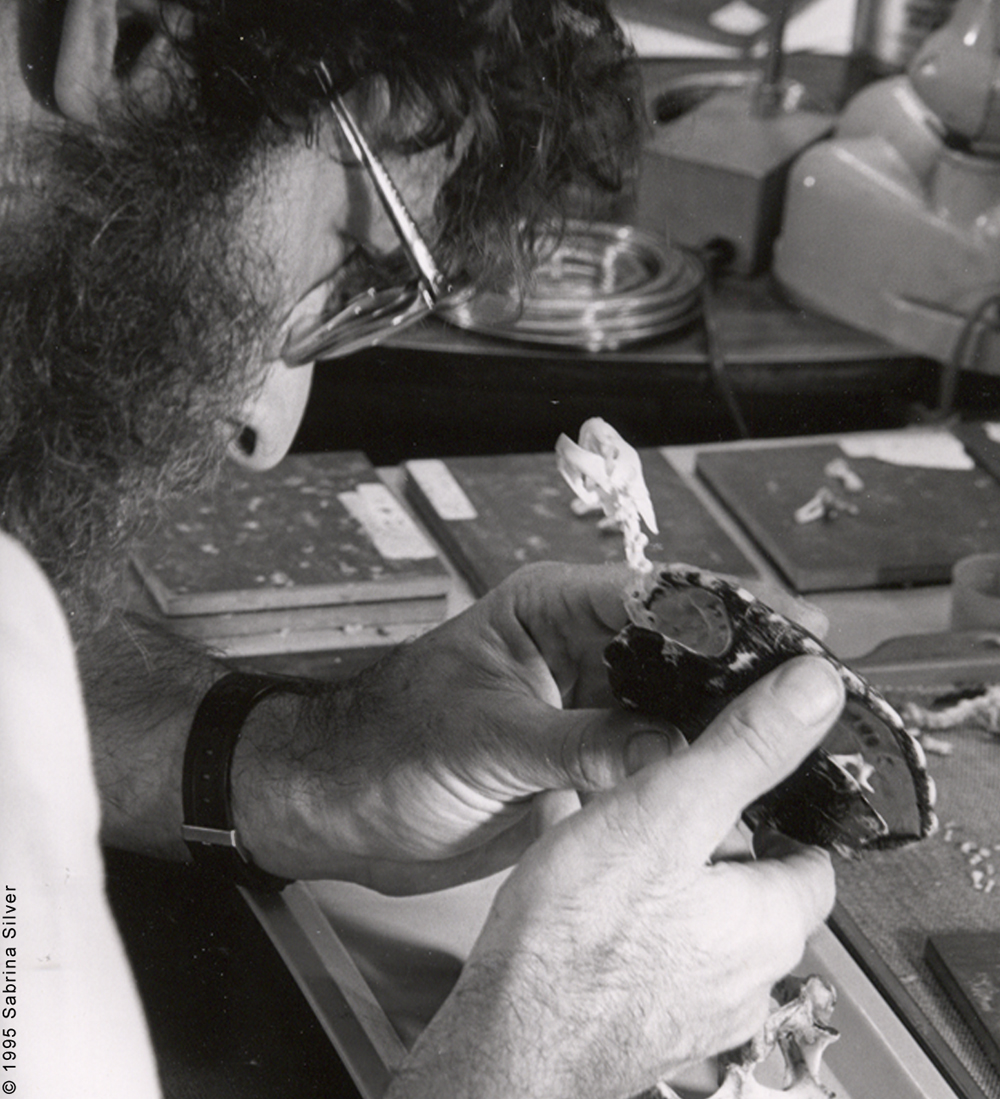
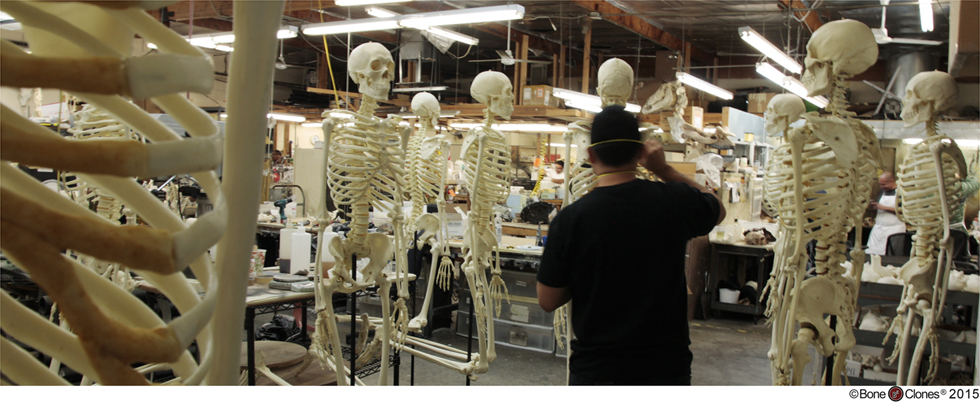
Much has happened in the world of replicating skulls and skeletons since Bone Clones® began in 1993, but the one thing that hasn't changed is our commitment to accuracy and quality. In our first year of business we coined the phrase "virtually indistinguishable from the original" and it remains our motto. When we started "cloning from real to resin," many wondered whether replicas would be accepted because they would not look "real." They commented that the few zoological replicas available were not convincing and broke easily. That became our first challenge: to make a reproduction so faithful to the original that it was, in fact, difficult to distinguish between them. At the same time, the reproduction must be durable. Many years later we are pleased that Bone Clones® (the brand) has become so well accepted that our replicas are used regularly in a variety of educational disciplines from anthropology to zoology. We are often told that educators now prefer, for a variety of reasons, to use replicas over natural bone and that Bone Clones® (if we may boast for a moment) were the catalyst for that change. When looking to purchase the best quality and detail in a cast of a human or animal skull or skeleton, whether extant or extinct, make sure it is a Bone Clones® cast. Each year Bone Clones, Inc. has explored new territory. In the beginning we reproduced primarily animal skulls, our very first being a Gorilla skull (BC-001). After the success of our initial launchings, our customers began to ask for specific replicas they would like to see us do. Since then, we have been going where our customers have directed us to go. From the history of man in the fossil record, to evidence of trauma and pathology imbedded in the bones of modern man, from the extant to the extinct in the animal world, from the obvious to the obscure in nature - we continue to explore ways to present the information left on the bones in such accurate detail that significant knowledge can be gained from it. All products are hand crafted by a skilled crew in our facilities in Southern California. Using proprietary techniques for prepping and making a mold of the original material and custom- formulated polyurethane resin, we cast the finest replicas available. The final step of coloring the piece to replicate that of the original is done by our expertly trained painters. Then, of course, it proceeds to our quality control department, where each cast is inspected in the minutest detail. We wish to thank the many individuals and institutions that lend Bone Clones, Inc. original material to cast, and our customers who encourage us to press forward and who are not shy in telling us in what direction. As always, we wish to thank our staff, who demonstrates uncommon dedication in the pursuit of excellence. OUR MISSION
Since our inception, our mission has been to produce skulls and skeletons that are "virtually indistinguishable from the original."TM Replicating the minute anatomical details and capturing the gross structures as faithfully as possible have been the goals of Bone Clones, Inc. from the beginning. As we expanded our product line from animals to fossils and humans, we continued to apply these criteria to each piece that we cast. Quality is an essential component of Bone Clones®, and we have many procedures in place to assure that we maintain the high standards we have set for ourselves and that customers expect. This commitment to quality is coupled with our interest in responding to the needs of educators striving to provide quality education to their students. Bone Clones, Inc. shares with these professionals the desire to impart knowledge on the highest level possible and has concentrated its resources on developing outstanding osteological reproductions of human, fossil and animal skeletal structures. We routinely consult with experts involved in teaching Anatomy, Anthropology, Forensics, Paleontology and Zoology. We have developed proprietary processes, refined our production procedures, used the best originals available, inspect our product carefully, and still continually strive to bring you the very best in all that we do. Bone Clones® is a trademark of Bone Clones, Inc. Our trademark is a guarantee that a great deal of care and thought has gone into the development and production of each cast. Bone Clones® stands for our commitment to excellence. Choosing an Original Specimen
The importance of the original.... We thought we would talk a little about how we select specimens to cast because aside from the quality of the casting technique, the quality of the original determines the final outcome. To find a good quality original, we assess various characteristics like size, dentition, age, and general condition of the bone elements of the skull (or skeleton). We often search for years to find an original that meets our exacting standards, and are often aided by Museum collections as well as private collectors. This way we can bring you the best representation of any particular species. After locating an original that meets our criteria for casting, we apply our unique techniques to preparing it for the molding process, a step that is also very important in determining the appearance and scientific accuracy of the reproduction. How the nasal passages, for example, and other fine features are replicated depends on this time-consuming and meticulous prepping procedure. Once prepped, a mold (or impression) is made of the original. Our custom formulated resin is then poured into these molds and once the piece has solidified, it is an exact copy of the original. Next we finish each replica duplicating the subtle structures and scientific detail of natural and fossilized bone. In the final steps we reproduce the complex patterns and colors of the originals. Superior quality is built into Bone Clones® in the very first step of the process - the selection of the original material. We then proceed with care and skill to achieve the best possible replicas, with attention to subtle details of appearance, texture and weight. Collections
Fossil Hominids: a collection of recreations that represent the most important finds and time periods of hominid evolution, including Australopithecus afarensis (skull and skeleton), Australopithecus africanus, Australopithecus boisei, Homo ergaster (skull and skeleton), Homo erectus, and Homo neanderthalensis (skull and skeleton), among others. We also offer a web-based reference tool (Rotational Series) for our hominid series. Human Anatomy: a large selection of human skulls and skeletons ranging from pre-natal to elderly, including sex and ancestry differences. Bone Clones® offers the world's only fetal osteology reference set to span the intrauterine growth period from 13 weeks to full term. Available also are several medical quality skulls designed to teach more advanced anatomy. These include calvarium cut, numbered calvarium cut, sagittal cut, disarticulated and color-coded skulls. A consultant osteologist has evaluated our product and has prepared an analysis report for many of the skulls and other skeletal elements, which indicates the measures that went into the determination of age, sex and ancestry of the specimen. Forensic Science: a collection of rare specimens, carefully selected by experts in forensic science. Our collection has been greatly enhanced by licenses to cast from originals in both the San Diego Museum of Man and the Maxwell Museum of Anthropology's Laboratory of Human Osteology, at the University of New Mexico, which serves as a repository of human remains. Our collection includes skeletal elements affected by trauma (e.g., blunt, sharp, firearms injuries) or pathology (e.g., arthritis, scoliosis, scaphocephaly). Extinct Animals: a fascinating array of skulls and skeletons that includes sabertooth cats, the cave bear, the short-faced bear, the elephant bird, the mammoth, the sarcosuchus, thoosuchus, and the dire wolf. Extant Animals: an impressive collection of skulls, skeletons, talons, horns, and teeth of animals including great apes, lesser primates, modern cats, bears, dogs, sharks, reptiles, amphibians, hippos, rhinos, giraffes, marine mammals and other small mammals. Museum Exhibitions
Bone Clones, Inc. has been in the forefront of the progress made in the casting of skulls, and skeletons and other natural history material. The appearance and detail is so realistic, the material so durable, and the selection so extensive and varied that museum directors around the world are conceiving displays that would not have been entertained a decade ago. Bone Clones® are playing a significant role in museum exhibits and becoming a part of the modern collections of these museums. For example: Natural History Museum of Denmark: In a permanent display titled "Evolution," The history of human evolution is illustrated with our skeletons including the Gorilla, Chimpanzee, Australopithecus afarensis ("Lucy"), Homo ergaster ("Nariokotome Boy"), Adult Male and Female Human, and Child Skeleton. www.zoologi.snm.ku.dk/english The Royal Tyrrell Museum in Alberta, Canada: A special exhibition dedicated to Darwin displays many of our hominid skulls and our cast of Sarcosuchus, also called the "Super Croc." www.tyrrellmuseum.com/exhibits/discoveries_hall.htm The University of Aberdeen Zoology Museum: An exhibit titled "The Art of the Model Maker" provides a fascinating history of the specialized artistry that replicates biological and anatomical forms. As examples of "the very best of these contemporary models," several of our fossil cat skulls and our komodo dragon skull were featured. www.abdn.ac.uk/zoologymuseum/exhibitions/model.php San Diego Museum of Man: An exhibit titled "Footsteps through Time: Four Million Years of Human Evolution" displays many of our casts. www.museumofman.org The Cimmarusti Science Center at Glendale Community College: We worked collaboratively with the College to design an exhibit titled "The Hidden Structures of Life." The exhibit used several of our skulls and skeletons to teach young students about the lifestyles of extinct and extant animals. Frequently Asked Questions
Q: Are your products real bone? If not, what are they made of? A: We sell NO natural bone. We cast from real bone in a custom-formulated polyurethane resin. Q: Our Bone Clones® casts are becoming quite dirty from handling and accidental pen markings. How do I clean them? A: In general, a gentle cleaning with soap and water is recommended. The "antique" skulls and other skeletal elements should be cleaned with a rag dampened with warm water and a small amount of mild soap. Gently clean and dry with a soft cloth. If some stains persist, then a diluted form of ordinary household alcohol will also work. However, it may remove some of the antique paint in sutures, so this should first be tested in a small area. The heavily painted products can be cleaned more aggressively with soap and water, but never use alcohol on them as it will probably remove a significant amount of the color. Likewise, never use acetone on heavily painted products. If you think your casts will get especially heavy use, we suggest coating them with a marine varnish finish. Q: What is the best way to color and stain a Bone Clones® product? A: Our custom-formulated polyurethane resin can be easily painted with oil stains, enamels, water paints or dyes (inks). To prevent the finish from wearing away due to handling, we suggest a clear coat of lacquer applied sparingly. If heavy wear is expected, then we recommend a polyurethane or marine varnish finish. Q: How can we repair broken pieces of skulls? A: Our Bone Clones® casts are quite durable and don't break easily. But if a cast does break, it can be repaired with Superglue, which should work unless there is some residue that prevents bonding. We suggest cleaning the two mating surfaces with acetone to be sure there is no residual barrier. When the two surfaces are clean, sparingly apply Superglue to one surface and press together. If the damage is extensive or is difficult to repair, Bone Clones Inc. can repair Bone Clones® products. Please contact customer service to discuss the nature of the repairs and the costs involved. Q: Are your casts of skulls based on real bones? How accurate are they? A: We produce accurate skeletal models that are molded and cast from real skulls and skeletons (with the exception of our Fossil Hominid line of products). They are true to actual size. Bone Clones® casts can be used in a variety of disciplines, for example, advanced anatomy and forensic analysis. Our production process and quality control are designed to assure accuracy in all details of products and reproduce the actual size of the original. Q: Are Bone Clones® skeletons accurate reproductions of human skeletons? Why are they more expensive than other skeletons I can buy? A: Our skeletons are produced to meet the needs of those educators and medical professions that require precision in detail. We are very selective in the originals we cast from, and concentrate on retaining the organic elements that are essential for advanced study. Such detail includes sites for muscle and ligament attachments, small landmarks such as nutrient foramina, fine detail such as that required by forensic investigators (for example, the pubic symphysis), and accurate weight. In fact, our skeletons are offered as a viable alternative to real bone, which can be difficult and costly to obtain. Our Bone Clones® skeletons are made of durable material that will withstand hands-on exploration. Additionally, Evan Matshes, M.D. and co-author of Human Osteology and Skeletal Radiology, or Dr. Karen Ramey Burns, forensic anthropologist and author of Forensic Anthropology Training Manual, has evaluated several of our human skeletons (and skulls) and written comprehensive reports on their characteristics. Q: How do your products do in extreme temperatures? Can they be outside for long periods? A: Our products are polyurethane and are custom-formulated to withstand heat up to 160 degrees Fahrenheit and cold below freezing. Above 160 degrees, the resin will get soft but will not melt. If the cast has delicate areas, such as the zygomatic arch, and a heavy item is placed on it during extreme heat, it will bend. Exposing Bone Clones® casts to sunlight (or florescent light) for prolonged periods may change the color/finish of the casts. Q: How can I prevent the color/finish of my Bone Clones® cast from changing over time? A: Exposure to ultraviolet (UV) rays is the source of changes in the color/finish of Bone Clones® casts. UV rays are emitted by both the sun and florescent light. So, the casts should not be placed in sunlight for prolonged periods. If the casts must be exposed to florescent lighting, filters can be placed over the florescent lights to limit UV ray exposure. Incandescent lighting does not emit the damaging UV rays. Testimonials
Dr. Gordon Hubbell Dr. Gilles Cuny Donna Koltash Jill Shapiro Phil Sary John Moore David Tegg Peter Wagner David C. Batten Jim Vanhollebeke Ronald Chavez, Principal Anne A. Hunter, M.D. Anonymous Acknowledgements
Bone Clones, Inc. gratefully acknowledges the generosity and support of the following individuals, institutions, and organizations for providing original specimens for us to cast:
|