



-
Fields of Study
- K-12 Education
- Advanced Anatomy
- Forensics
- Physical Therapy
- Primate Locomotion
- Non-primate Locomotion
- Biological Anthropology
- Paleontology
- Bioarchaeology
- Marine-Aquarium
- Veterinary
-
Zoology
- All Zoological Items
- Endangered Species
- Skulls
- Skeletons
- Cranial Elements
- Postcranial Elements
- Eggs
- Limbs
- Teeth & Fangs
- Claws & Talons
- Brains & Endocasts
- Life Casts
- Pathology & Trauma
- Wildlife Forensics
- Sets
- Bird Sets
- Accessories
- Birds
- Mammals
- Reptiles & Amphibians
- Fish
- Sharks & Rays
- Turtles & Tortoises
- Anatomy for the Artist
- Decor
- Veterinary
- Elements
- Pathology & Trauma
-
Sets & Series
- Natural History Gift Ideas
- Decor
- Scale & Sculpture
- 3D Scanned & Printed
- Bone Boxes
- Locomotion Sets
- Forensic Sets
- Advanced Anatomy Sets
- Physical Therapy Series
- Fetal Sets
- Economy Series
- Zoology Sets
- Bird Sets
- Claw & Talon Sets
- Tooth & Fang Sets
- Primate Skull Sets
- Fossil Hominid Sets
- B.I.O.P.S.I. - Babiarz Institute
- Maxwell Collection
- Bergdorf Goodman Windows
- Accessories
- New Products
-
Our Company
- News & Specials
- Printable Handouts
- About Us
- Why Choose Bone Clones
- Bone Clones in the News
- Mission
- Contact Us
- Privacy and Security
- FAQs
- Testimonials
- Community Outreach
- Legal/Copyright
- Flyers
- Choosing Original Specimens
- Museum Exhibitions
- Natural History Gift Ideas
- About the Economy Series
- Acknowledgements
- Ordering & Delivery
- Warranty
- Refund/Return Policy
- Osteological Evaluation Reports
- About 3D Printing
- Sawyer & Maley Neanderthal Reconstruction
- Newsletter Archive
-
Human Anatomy
- All Human Anatomy
- Human Skulls
- Human Skeletons
- Head & Neck
- Postcranial Elements
- Advanced Anatomy
- Physical Therapy / Joints
- Human Brains & Endocast
- Human Life Casts
- Maxwell Museum
- Sets & Series
- Accessories
- Osteological Evaluation Reports
- Featured
- Adult Human Anatomy
- Adolescent Human Anatomy
- Child Human Anatomy
- Fetal Human Anatomy
-
Zoology
- All Zoological Items
- Endangered Species
- Skulls
- Skeletons
- Cranial Elements
- Postcranial Elements
- Eggs
- Limbs
- Teeth & Fangs
- Claws & Talons
- Brains & Endocasts
- Life Casts
- Pathology & Trauma
- Wildlife Forensics
- Sets
- Bird Sets
- Accessories
- Birds
- Mammals
- Reptiles & Amphibians
- Fish
- Sharks & Rays
- Turtles & Tortoises
- Fossil Hominids
- Paleontology
- Non-human Primates
- Forensics
All items sold on this website are replicas; no real/natural bone is available on this site. Bone Clones® are 1:1 scale unless stated otherwise. All Bone Clones® products are made in the USA.
 ALSO SEE:
 button in the upper-right to email it.
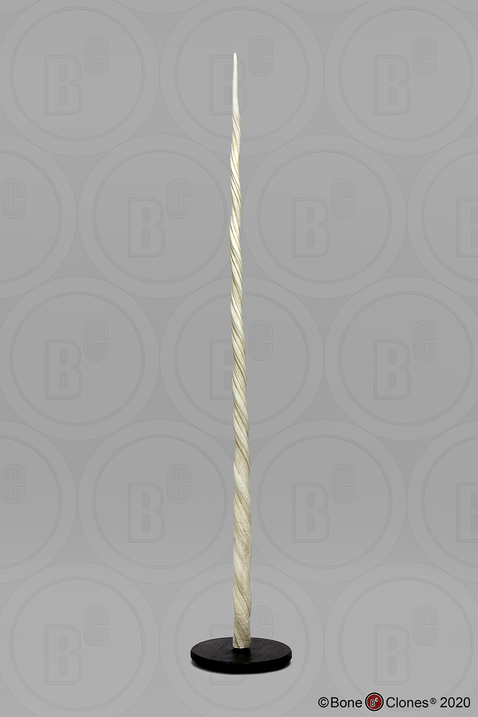
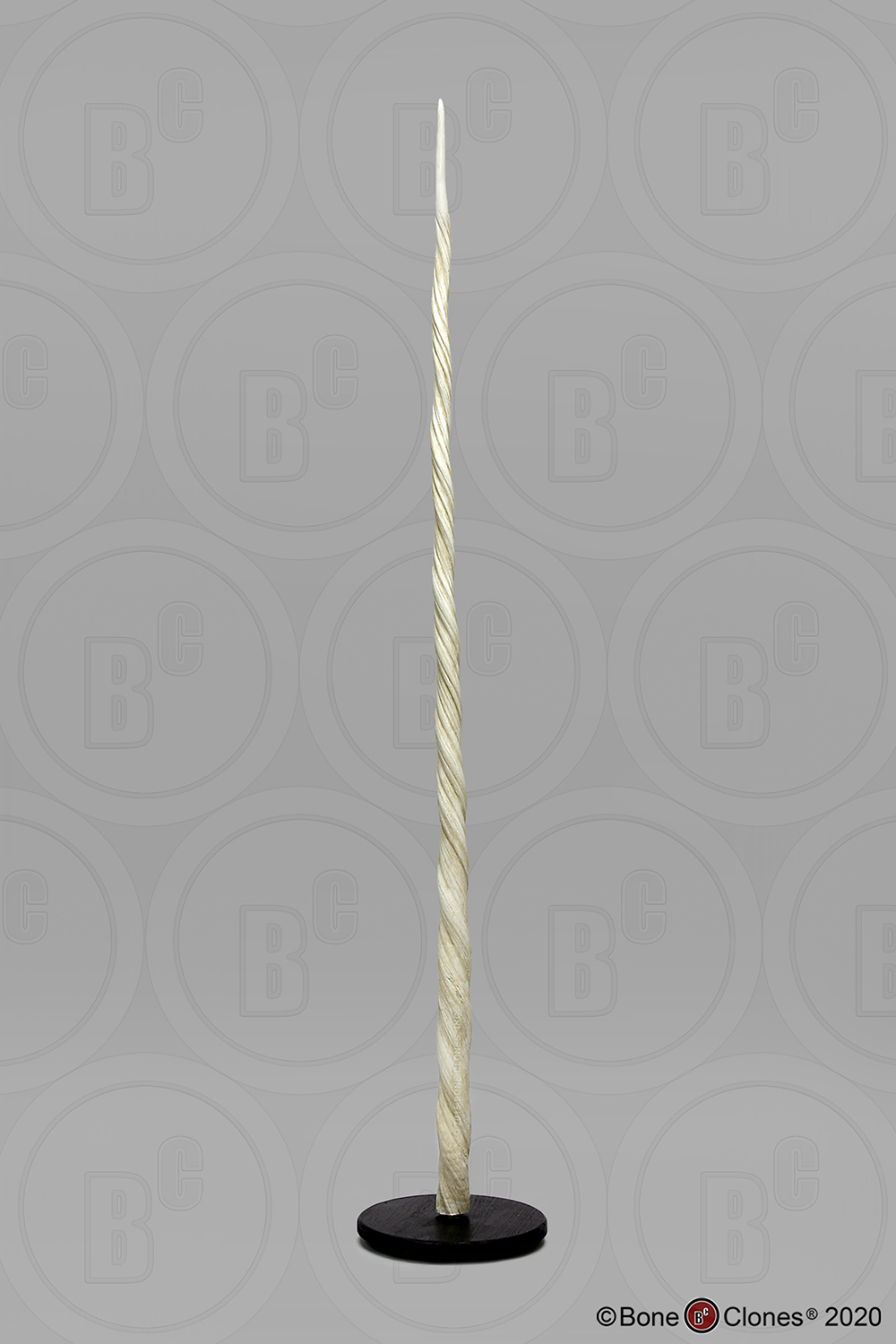
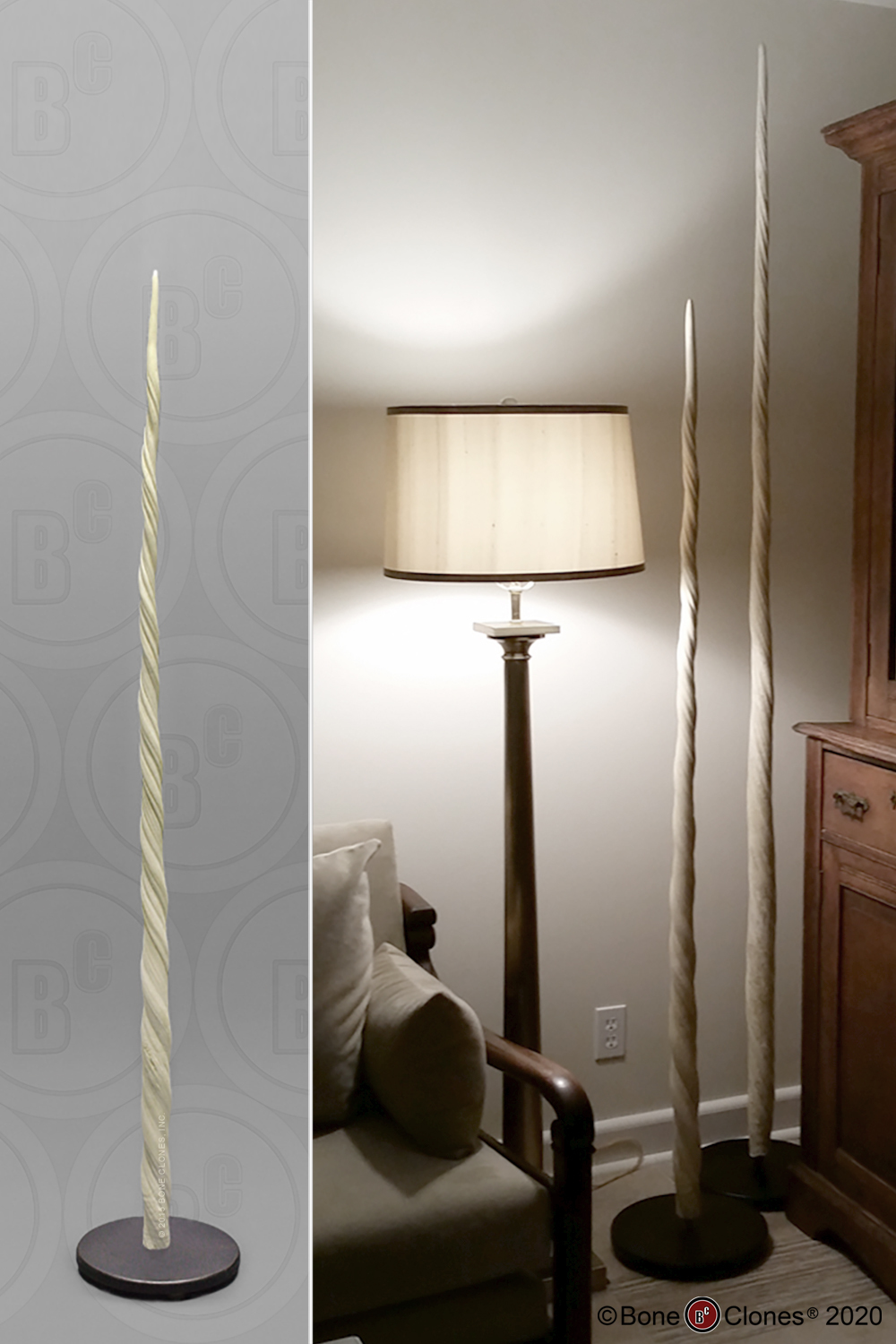
Narwhal Tusk, 69 Inches
KO-254 $542.00
(Base included)
Special handling fees will be applied to this order. We will contact you with the amount prior to shipping.
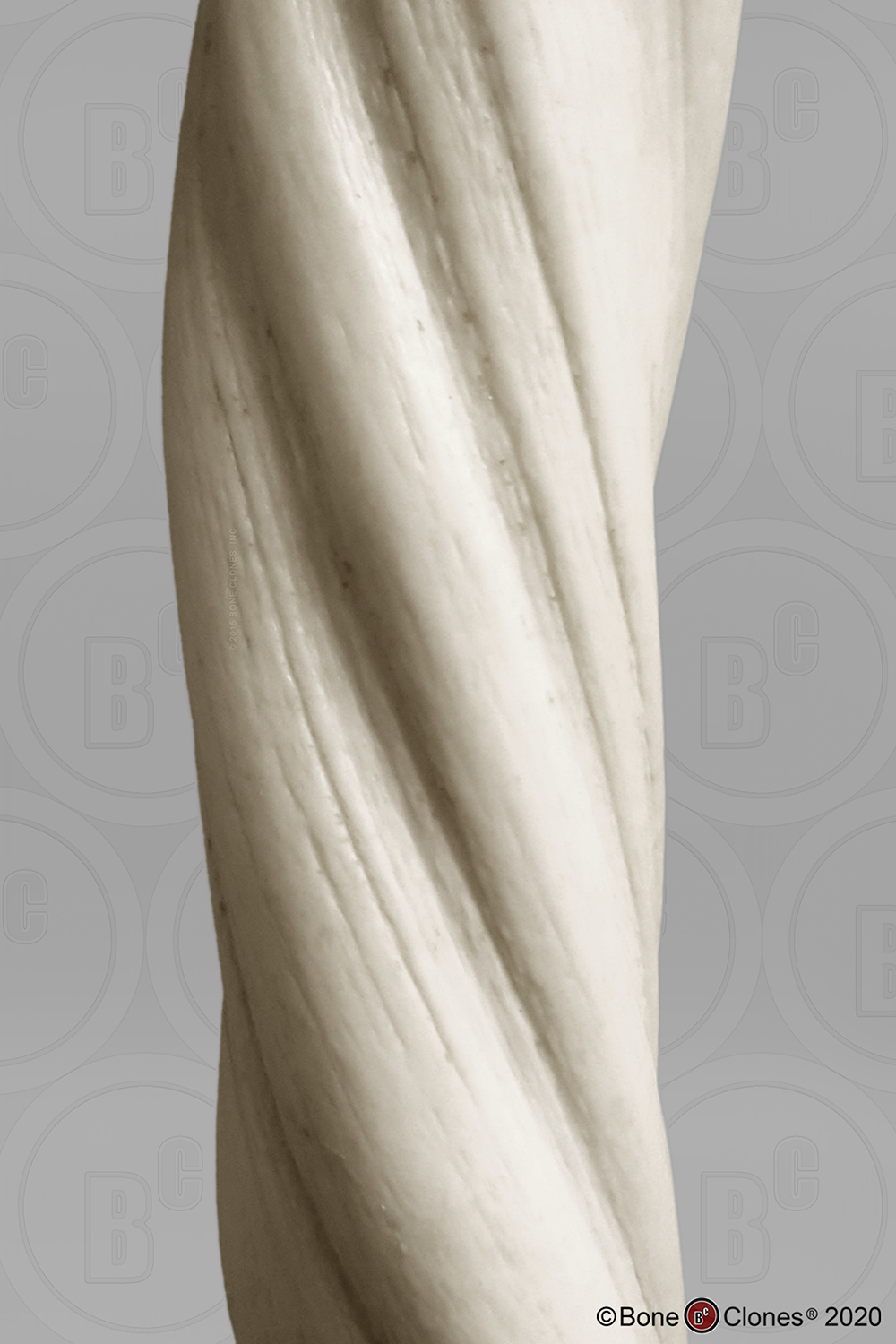
The narwhal tusk KO-254 is a bit shy of 6 feet long and 2 1/4" wide at the base. Our other narwhal tusk, KO-256 is a full 90 inches tall and 2 1/2 inches wide at the base. Each tusk has a steel center to prevent bending or warping. A threaded steel rod protrudes from the end for attachment to the solid round base. Both the base and the rod are removable to allow for horizontal display. Each Bone Clones® narwhal tusk is expertly cast to reveal its delicate and beautiful spirals. Narwhals are cetaceans, most closely related to the familiar beluga whales often seen in marine parks around the world. Males have an amazing tooth, or tusk, that is unique in the animal kingdom. This tusk most often grows from the left hand side of their upper maxilla in a left-turning helix (spiral twist), reaching lengths of almost 10 feet in an animal that reaches only 16 feet itself.
| Scientific Name | Catalogue # | Size | Price |
| Monodon monoceros | KO-254 | 69" | $542.00 |
Newsletter Signup


9200 Eton Ave.
Chatsworth, CA 91311 USA
© 1992-2026 Bone Clones Holdings. All Rights Reserved.


Customer Service




© 2026 BONE CLONES HOLDINGS / Made by MEV