


-
Fields of Study
- K-12 Education
- Advanced Anatomy
- Forensics
- Physical Therapy
- Primate Locomotion
- Non-primate Locomotion
- Biological Anthropology
- Paleontology
- Bioarchaeology
- Marine-Aquarium
- Veterinary
-
Zoology
- All Zoological Items
- Endangered Species
- Skulls
- Skeletons
- Cranial Elements
- Postcranial Elements
- Eggs
- Limbs
- Teeth & Fangs
- Claws & Talons
- Brains & Endocasts
- Life Casts
- Pathology & Trauma
- Wildlife Forensics
- Sets
- Bird Sets
- Accessories
- Birds
- Mammals
- Reptiles & Amphibians
- Fish
- Sharks & Rays
- Turtles & Tortoises
- Anatomy for the Artist
- Decor
- Veterinary
- Elements
- Pathology & Trauma
-
Sets & Series
- Natural History Gift Ideas
- Decor
- Scale & Sculpture
- 3D Scanned & Printed
- Bone Boxes
- Locomotion Sets
- Forensic Sets
- Advanced Anatomy Sets
- Physical Therapy Series
- Fetal Sets
- Economy Series
- Zoology Sets
- Bird Sets
- Claw & Talon Sets
- Tooth & Fang Sets
- Primate Skull Sets
- Fossil Hominid Sets
- B.I.O.P.S.I. - Babiarz Institute
- Maxwell Collection
- Bergdorf Goodman Windows
- Accessories
- New Products
-
Our Company
- News & Specials
- Printable Handouts
- About Us
- Why Choose Bone Clones
- Bone Clones in the News
- Mission
- Contact Us
- Privacy and Security
- Frequently Asked Questions
- Testimonials
- Community Outreach
- Legal/Copyright
- Flyers
- Choosing Original Specimens
- Museum Exhibitions
- Natural History Gift Ideas
- About the Economy Series
- Acknowledgements
- Ordering & Delivery
- Warranty
- Refund/Return Policy
- Price List at a Glance
- Our Catalog
- Osteological Evaluation Reports
- About 3D Printing
- Sawyer & Maley Neanderthal Reconstruction
- Site Introduction
- Newsletter Archive
-
Human Anatomy
- All Human Anatomy
- Human Skulls
- Human Skeletons
- Head & Neck
- Postcranial Elements
- Advanced Anatomy
- Physical Therapy / Joints
- Human Brains & Endocast
- Human Life Casts
- Maxwell Museum
- Sets & Series
- Accessories
- Osteological Evaluation Reports
- Featured
- Adult Human Anatomy
- Adolescent Human Anatomy
- Child Human Anatomy
- Fetal Human Anatomy
-
Zoology
- All Zoological Items
- Endangered Species
- Skulls
- Skeletons
- Cranial Elements
- Postcranial Elements
- Eggs
- Limbs
- Teeth & Fangs
- Claws & Talons
- Brains & Endocasts
- Life Casts
- Pathology & Trauma
- Wildlife Forensics
- Sets
- Bird Sets
- Accessories
- Birds
- Mammals
- Reptiles & Amphibians
- Fish
- Sharks & Rays
- Turtles & Tortoises
- Fossil Hominids
- Non-human Primates
- Paleontology
- Forensics
All items sold on this website are replicas and are 1:1 scale unless stated otherwise. All Bone Clones® products are made in the USA. No real/natural bone is available on this site.
 ALSO SEE:
 button in the upper-right to email it.
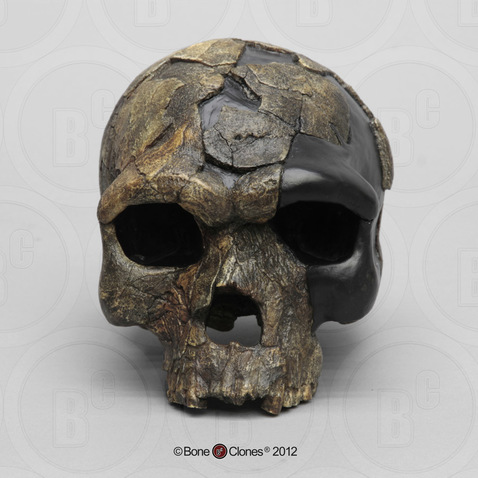
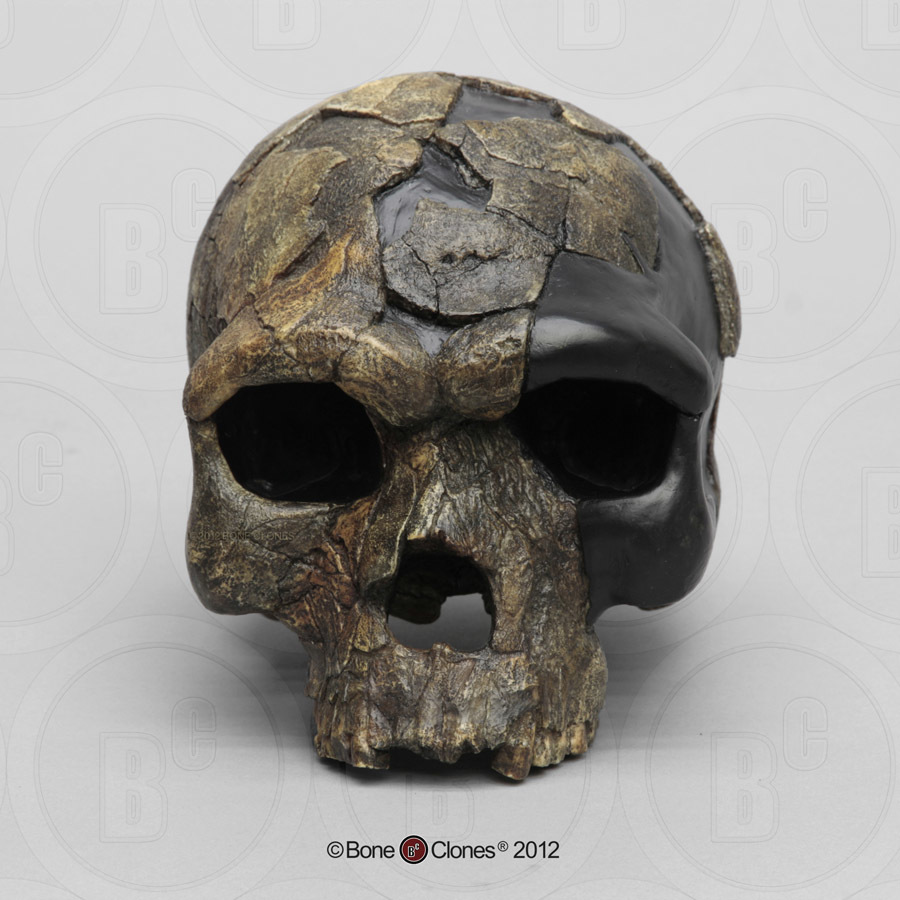
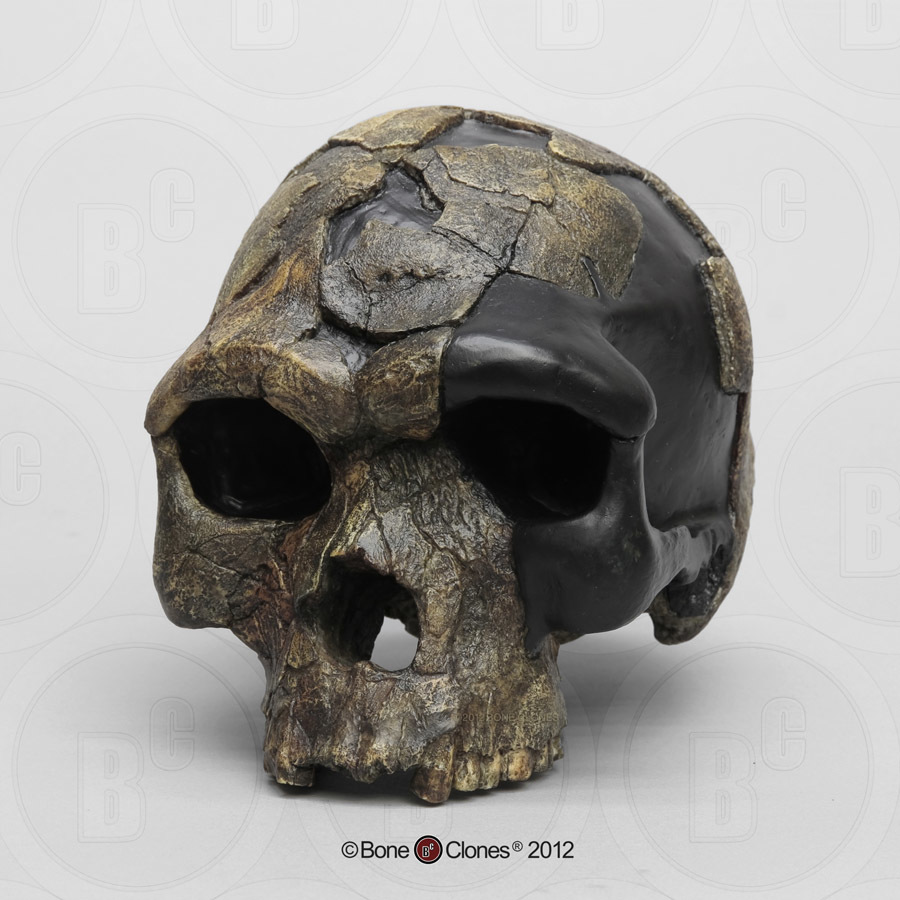
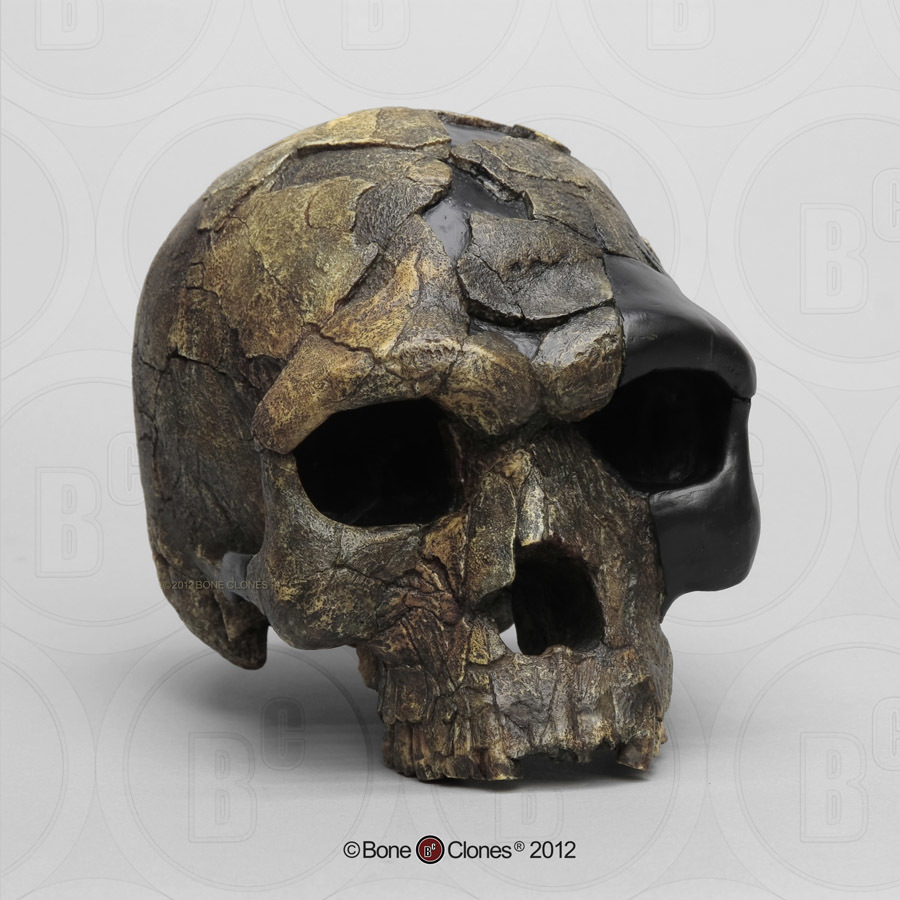
Homo sapiens idaltu BOU-VP-16/1 Herto Cranium
BH-045 $396.00
160,000/154,000 YA. BOU-VP-16/1 was discovered in Herto, Middle Awash, Ethiopia, in 1997 by an international team led by researchers from UC Berkeley. This adult cranium with a cranial capacity of 1450cc is nearly complete with only slight distortion. Discoverers White et al. describe the morphology as intermediate between earlier archaic African forms, such as Bodo and Kabwe, and later Anatomically Modern Humans (AMH). It is on this basis that they view it as a probable immediate ancestor of AMHs and designate the subspecies name idaltu ("elder"). Many investigators instead include Herto directly within our own taxon H. sapiens sapiens. For many researchers this find lends strong support to the hypothesis that AMHs emerged in Africa ("Out of Africa") and eventually replaced other populations including the Neanderthals with little interbreeding. Herto was found in association with both Acheulean and Middle Stone Age tools. Interestingly, Clark et al. report that this cranium along with the other two discovered (another adult and a 6-7 year old child) show evidence of postmortem defleshing consistent with deliberate mortuary practice rather than cannibalism.
Bone Clones recreated this cranium based on the latest literature, including descriptions, measurements and photographs. The Bone Clones® Fossil Hominid line is composed of discoveries from anatomically modern humans, archaic humans, early Homo, early hominins, and other hominids. The majority of the casts in this line have been recreated by our team of anatomical sculptors. Some are reconstructions made by anthropology professionals using fragmentary elements from original discoveries and extrapolating the missing parts from those (i.e. Neanderthal skeleton).
Custom display stand available below.
Clark, J.D. et al. 2003. Stratigraphic, chronological and behavioral contexts of Pleistocene Homo sapiens from Middle Awash, Ethiopia. Nature 423,6941:747-752.
White, T., et al. Pleistocene Homo sapiens from Middle Awash, Ethiopia. Nature. 423,742-747 (2003).
| Scientific Name | Catalogue # | Size | Price |
| Homo sapiens idaltu | BH-045 | 9" L x 6" W x 6 ½" H 22.5L x 15.7W x 16.3H (cm) | $396.00 |
Related Products:
-
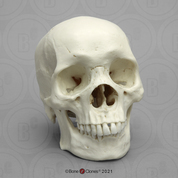 Human Skull, Male African
 -
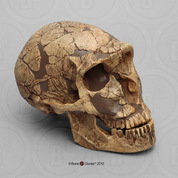 Homo neanderthalensis Skull La Ferrassie 1
 -
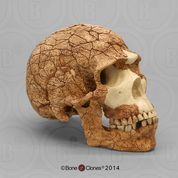 Homo sapiens Skull Skhul 5
 -
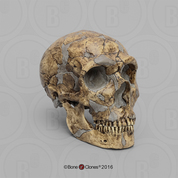 Homo neanderthalensis Skull - Sawyer-Maley Reconstruction
 -
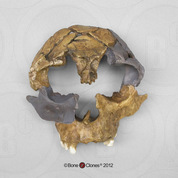 Homo antecessor Cranium
 -
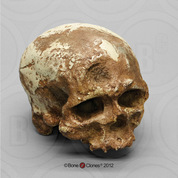 Cro-Magnon 1 Cranium
 -
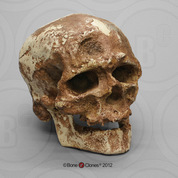 Cro-Magnon 1 Skull
 -
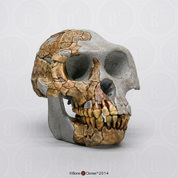 Ardipithecus ramidus Skull
 -
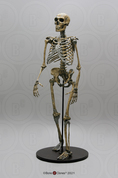 Neanderthal Skeleton, Articulated
 -
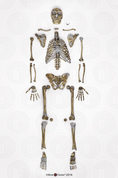 Neanderthal Skeleton, Disarticulated
Newsletter Signup


9200 Eton Ave.
Chatsworth, CA 91311 USA
© 1992-2024 Bone Clones, Inc. All Rights Reserved.


Customer Service




© 2024 BONE CLONES, INC. / Made by MEV