


-
Fields of Study
- K-12 Education
- Advanced Anatomy
- Forensics
- Physical Therapy
- Primate Locomotion
- Non-primate Locomotion
- Biological Anthropology
- Paleontology
- Bioarchaeology
- Marine-Aquarium
- Veterinary
-
Zoology
- All Zoological Items
- Endangered Species
- Skulls
- Skeletons
- Cranial Elements
- Postcranial Elements
- Eggs
- Limbs
- Teeth & Fangs
- Claws & Talons
- Brains & Endocasts
- Life Casts
- Pathology & Trauma
- Wildlife Forensics
- Sets
- Bird Sets
- Accessories
- Birds
- Mammals
- Reptiles & Amphibians
- Fish
- Sharks & Rays
- Turtles & Tortoises
- Anatomy for the Artist
- Decor
- Veterinary
- Elements
- Pathology & Trauma
-
Sets & Series
- Natural History Gift Ideas
- Decor
- Scale & Sculpture
- 3D Scanned & Printed
- Bone Boxes
- Locomotion Sets
- Forensic Sets
- Advanced Anatomy Sets
- Physical Therapy Series
- Fetal Sets
- Economy Series
- Zoology Sets
- Bird Sets
- Claw & Talon Sets
- Tooth & Fang Sets
- Primate Skull Sets
- Fossil Hominid Sets
- B.I.O.P.S.I. - Babiarz Institute
- Maxwell Collection
- Bergdorf Goodman Windows
- Accessories
- New Products
-
Our Company
- News & Specials
- Printable Handouts
- About Us
- Why Choose Bone Clones
- Bone Clones in the News
- Mission
- Contact Us
- Privacy and Security
- Frequently Asked Questions
- Testimonials
- Community Outreach
- Legal/Copyright
- Flyers
- Choosing Original Specimens
- Museum Exhibitions
- Natural History Gift Ideas
- About the Economy Series
- Acknowledgements
- Ordering & Delivery
- Warranty
- Refund/Return Policy
- Price List at a Glance
- Our Catalog
- Osteological Evaluation Reports
- About 3D Printing
- Sawyer & Maley Neanderthal Reconstruction
- Site Introduction
- Newsletter Archive
-
Human Anatomy
- All Human Anatomy
- Human Skulls
- Human Skeletons
- Head & Neck
- Postcranial Elements
- Advanced Anatomy
- Physical Therapy / Joints
- Human Brains & Endocast
- Human Life Casts
- Maxwell Museum
- Sets & Series
- Accessories
- Osteological Evaluation Reports
- Featured
- Adult Human Anatomy
- Adolescent Human Anatomy
- Child Human Anatomy
- Fetal Human Anatomy
-
Zoology
- All Zoological Items
- Endangered Species
- Skulls
- Skeletons
- Cranial Elements
- Postcranial Elements
- Eggs
- Limbs
- Teeth & Fangs
- Claws & Talons
- Brains & Endocasts
- Life Casts
- Pathology & Trauma
- Wildlife Forensics
- Sets
- Bird Sets
- Accessories
- Birds
- Mammals
- Reptiles & Amphibians
- Fish
- Sharks & Rays
- Turtles & Tortoises
- Fossil Hominids
- Non-human Primates
- Paleontology
- Forensics
All items sold on this website are replicas and are 1:1 scale unless stated otherwise. All Bone Clones® products are made in the USA. No real/natural bone is available on this site.
 ALSO SEE:
 button in the upper-right to email it.
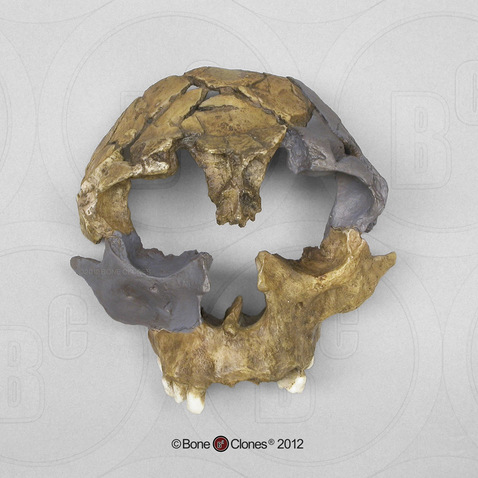
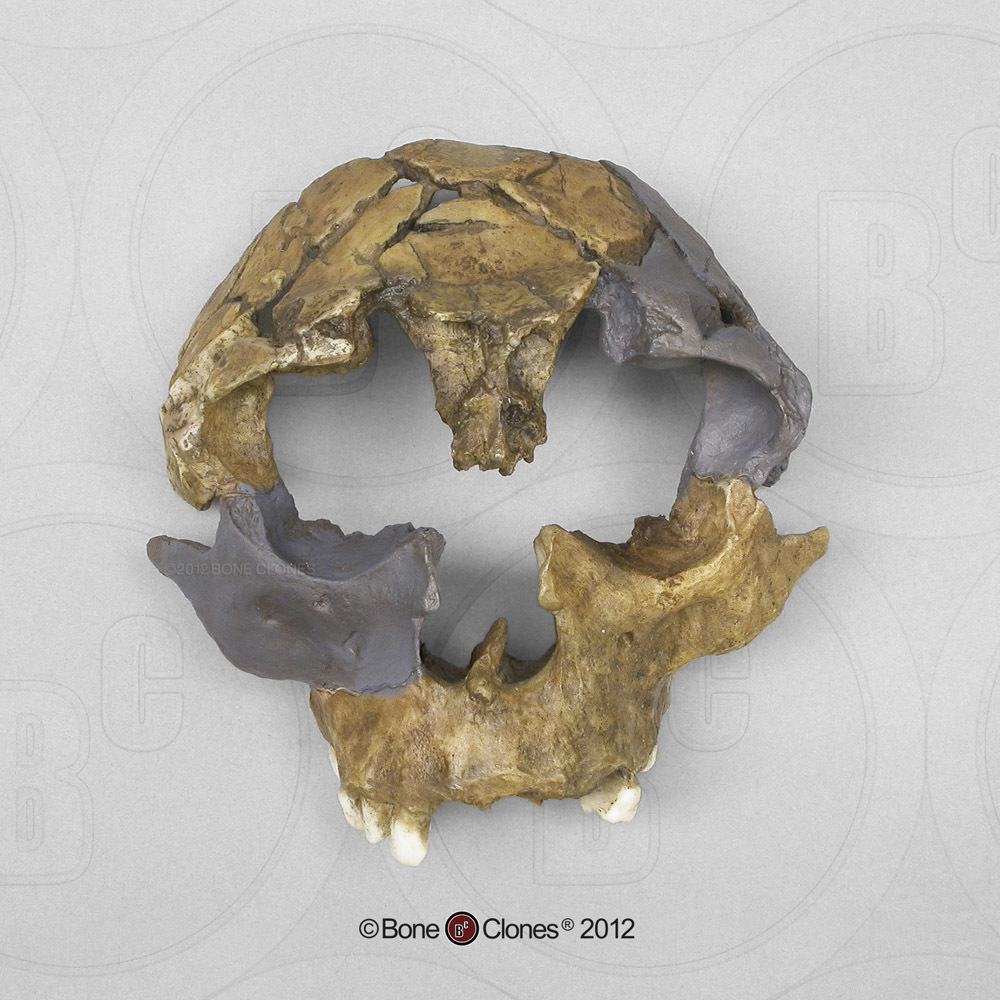
Homo antecessor Cranium
BH-031 $260.00
936,000 YA. The Homo antecessor cranium was discovered in 1995 by J. M. Bermudez de Castro at the Gran Dolina site in Atapuerca, Spain, and described in Science in 1997. Before the discovery of Homo antecessor, there was no evidence that would substantiate the presence of hominids in Europe before a half million years ago. Fossils and stone tools at least 936,000 years old were found at the Gran Dolina site in Atapuerca. Homo antecessor (brain size over 1,000 cc) possessed characteristics of both Neanderthals and Homo sapiens. With the bulky brow and big jaw of the now extinct Neanderthal and the cheekbones and nose of Homo sapiens, the researchers believe they have discovered a missing link that may cause a major reconsideration of human ancestry.
The Bone Clones® Fossil Hominid line is composed of discoveries from anatomically modern humans, archaic humans, early Homo, early hominins, and other hominids. The majority of the casts in this line have been recreated by our team of anatomical sculptors. Some are reconstructions made by anthropology professionals using fragmentary elements from original discoveries and extrapolating the missing parts from those (i.e. Neanderthal skeleton).
Custom display stand available below.
| Scientific Name | Catalogue # | Size | Price |
| Homo antecessor | BH-031 | 4" L x 4 ½" W x 5" H 9.6L x 11.7W x 12.4H (cm) | $260.00 |
Related Products:
-
 Ardipithecus ramidus Skull
 -
 Homo erectus Skull - Tattersall-Sawyer Recreation
 -
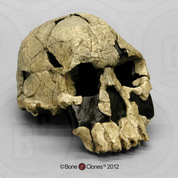 Homo rudolfensis Cranium KNM-ER 1470
 -
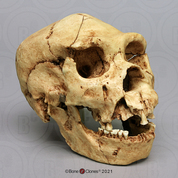 Homo heidelbergensis Skull Atapuerca 5
 -
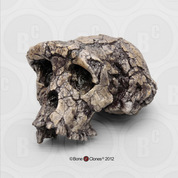 Sahelanthropus tchadensis Cranium
 -
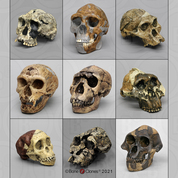 Set of 9 Fossil Hominid Skulls
 -
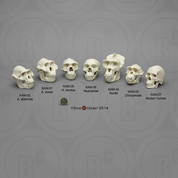 Set of 7 Primate Skulls, Half Scale
 -
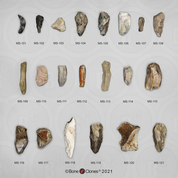 Set of 21 Neanderthal Tools
 -
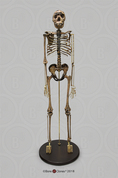 Homo ergaster KNM-WT 15000 Skeleton, Articulated
 -
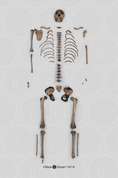 Homo ergaster KNM-WT 15000 Skeleton, Disarticulated
 -
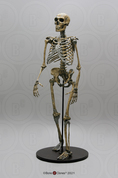 Neanderthal Skeleton, Articulated
 -
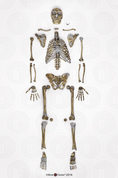 Neanderthal Skeleton, Disarticulated
 -
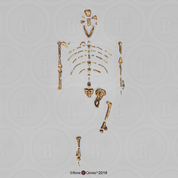 "Lucy" Skeleton, Disarticulated
 -
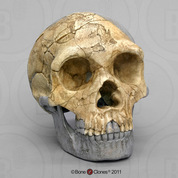 Homo neanderthalensis Skull Forbes' Quarry Gibraltar 1
 -
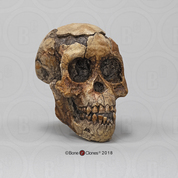 Australopithecus afarensis Skull "Selam"
Newsletter Signup


9200 Eton Ave.
Chatsworth, CA 91311 USA
© 1992-2024 Bone Clones, Inc. All Rights Reserved.


Customer Service




© 2024 BONE CLONES, INC. / Made by MEV