



-
Fields of Study
- K-12 Education
- Advanced Anatomy
- Forensics
- Physical Therapy
- Primate Locomotion
- Non-primate Locomotion
- Biological Anthropology
- Paleontology
- Bioarchaeology
- Marine-Aquarium
- Veterinary
-
Zoology
- All Zoological Items
- Endangered Species
- Skulls
- Skeletons
- Cranial Elements
- Postcranial Elements
- Eggs
- Limbs
- Teeth & Fangs
- Claws & Talons
- Brains & Endocasts
- Life Casts
- Pathology & Trauma
- Wildlife Forensics
- Sets
- Bird Sets
- Accessories
- Birds
- Mammals
- Reptiles & Amphibians
- Fish
- Sharks & Rays
- Turtles & Tortoises
- Anatomy for the Artist
- Decor
- Veterinary
- Elements
- Pathology & Trauma
-
Sets & Series
- Natural History Gift Ideas
- Decor
- Scale & Sculpture
- 3D Scanned & Printed
- Bone Boxes
- Locomotion Sets
- Forensic Sets
- Advanced Anatomy Sets
- Physical Therapy Series
- Fetal Sets
- Economy Series
- Zoology Sets
- Bird Sets
- Claw & Talon Sets
- Tooth & Fang Sets
- Primate Skull Sets
- Fossil Hominid Sets
- B.I.O.P.S.I. - Babiarz Institute
- Maxwell Collection
- Bergdorf Goodman Windows
- Accessories
- New Products
-
Our Company
- News & Specials
- Printable Handouts
- About Us
- Why Choose Bone Clones
- Bone Clones in the News
- Mission
- Contact Us
- Privacy and Security
- FAQs
- Testimonials
- Community Outreach
- Legal/Copyright
- Flyers
- Choosing Original Specimens
- Museum Exhibitions
- Natural History Gift Ideas
- About the Economy Series
- Acknowledgements
- Ordering & Delivery
- Warranty
- Refund/Return Policy
- Osteological Evaluation Reports
- About 3D Printing
- Sawyer & Maley Neanderthal Reconstruction
- Newsletter Archive
-
Human Anatomy
- All Human Anatomy
- Human Skulls
- Human Skeletons
- Head & Neck
- Postcranial Elements
- Advanced Anatomy
- Physical Therapy / Joints
- Human Brains & Endocast
- Human Life Casts
- Maxwell Museum
- Sets & Series
- Accessories
- Osteological Evaluation Reports
- Featured
- Adult Human Anatomy
- Adolescent Human Anatomy
- Child Human Anatomy
- Fetal Human Anatomy
-
Zoology
- All Zoological Items
- Endangered Species
- Skulls
- Skeletons
- Cranial Elements
- Postcranial Elements
- Eggs
- Limbs
- Teeth & Fangs
- Claws & Talons
- Brains & Endocasts
- Life Casts
- Pathology & Trauma
- Wildlife Forensics
- Sets
- Bird Sets
- Accessories
- Birds
- Mammals
- Reptiles & Amphibians
- Fish
- Sharks & Rays
- Turtles & Tortoises
- Fossil Hominids
- Non-human Primates
- Paleontology
- Forensics
All items sold on this website are replicas; no real/natural bone is available on this site. Bone Clones® are 1:1 scale unless stated otherwise. All Bone Clones® products are made in the USA.
 ALSO SEE:
 button in the upper-right to email it.
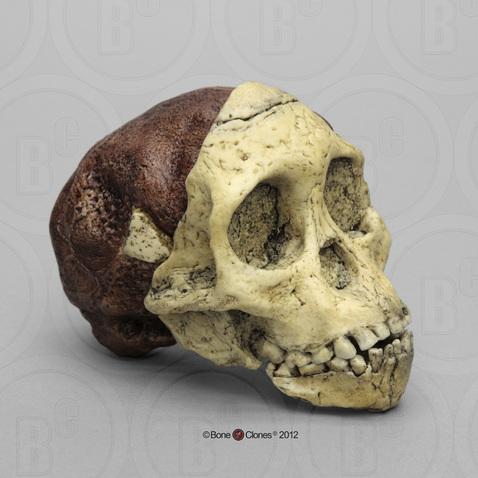
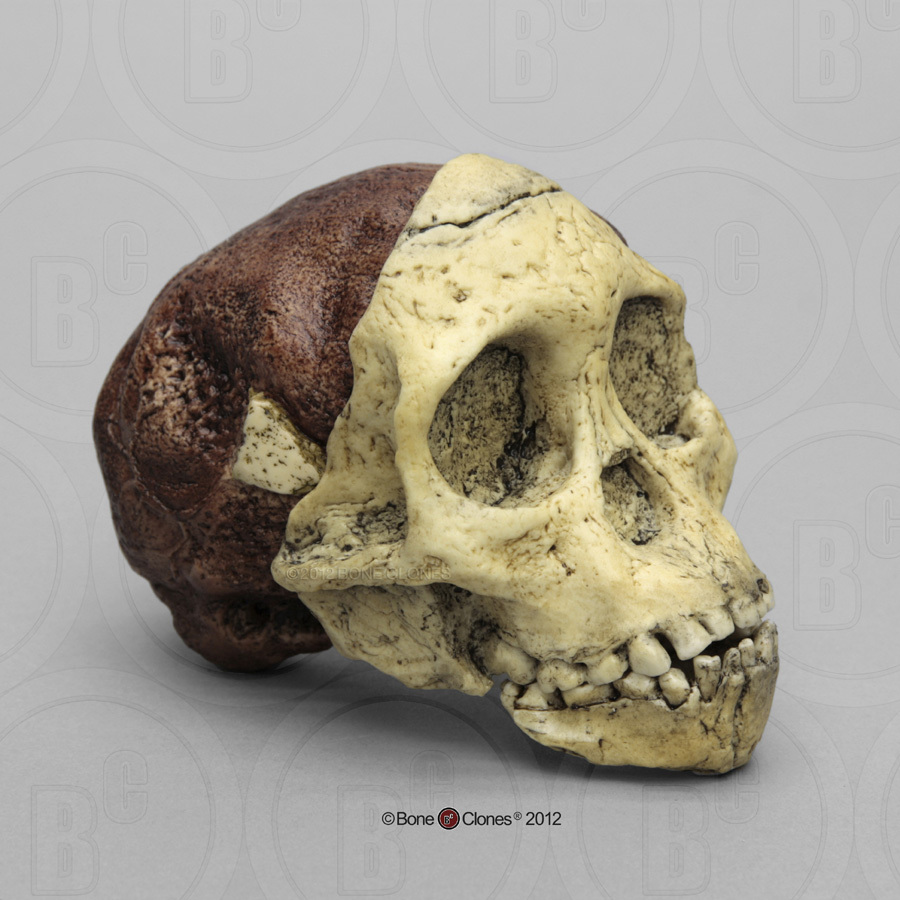
Australopithecus africanus Skull (Taung Child)
BH-016 $246.00
2.3 MYA. The Australopithecus africanus Skull (Taung Child) was discovered by M. de Bruyn in Taung, South Africa in 1924. Anatomy professor Raymond Dart identified this juvenile skull as a new genus and species of hominid in 1925 in Nature (Australopithecus africanus, which means "southern ape of Africa"). Dart considered his new man-like ape to be intermediate between humans and apes. The skull, though immature, features several hominid-like characteristics including: a rounded, high forehead lacking browridges, rounded dental arcade, no space between canine and first lower premolar, and a foramen magnum (the hole under the skull from which the spinal cord emerges) positioned forwardly under the skull, indicating bipedal locomotion. On the other hand, the child's cranial capacity is estimated at 405 cc, with a projected adult size of 440 cc., well within the ape range. It was not until other, adult, specimens were discovered in southern Africa during the next twenty years that Australopithecus africanus began to gain acceptance in the established scientific community. In 3 pieces: cranium, jaw and brain.
The Bone Clones® Fossil Hominid line is composed of discoveries from anatomically modern humans, archaic humans, early Homo, early hominins, and other hominids. The majority of the casts in this line have been recreated by our team of anatomical sculptors. Some are reconstructions made by anthropology professionals using fragmentary elements from original discoveries and extrapolating the missing parts from those (i.e. Neanderthal skeleton).
Custom display stand available below. For information on assembling this skull with the optional stand, see the Assembly Instructions PDF.
| Scientific Name | Catalogue # | Size | Price |
| Australopithecus africanus | BH-016 | 5" L x 3" W x 4" H 13.1L x 7.6W x 9.9H (cm) | $246.00 |
Related Products:
-
 Australopithecus (Paranthropus) robustus Skull DNH 7
 -
 Ardipithecus ramidus Skull
 -
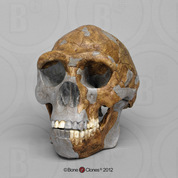 Homo erectus Skull - Tattersall-Sawyer Recreation
 -
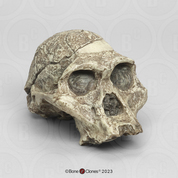 Australopithecus africanus Cranium Sts 5 "Mrs. Ples"
 -
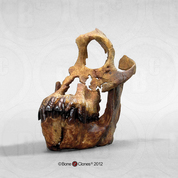 Sivapithecus Skull
 -
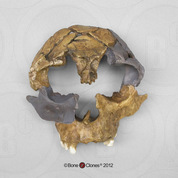 Homo antecessor Cranium
 -
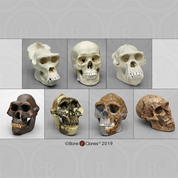 Set of 7 Primate Skulls
 -
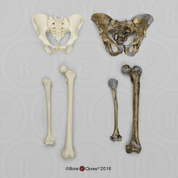 Neanderthal and Modern Human Comparative Pelvis, Femur, Humerus Set
 -
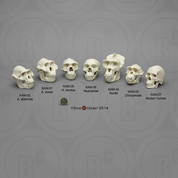 Set of 7 Primate Skulls, Half Scale
 -
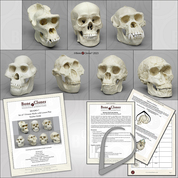 Set of 7 Primate Skulls with Lesson Plan
Newsletter Signup


9200 Eton Ave.
Chatsworth, CA 91311 USA
© 1992-2026 Bone Clones Holdings. All Rights Reserved.


Customer Service




© 2026 BONE CLONES HOLDINGS / Made by MEV